Inside Eternal's Android Ketchup Meetup
Notes from an invite-only Android developers meetup at the Zomato office farmhouse: scale, backend-driven UI, and a t-shirt I did not earn.
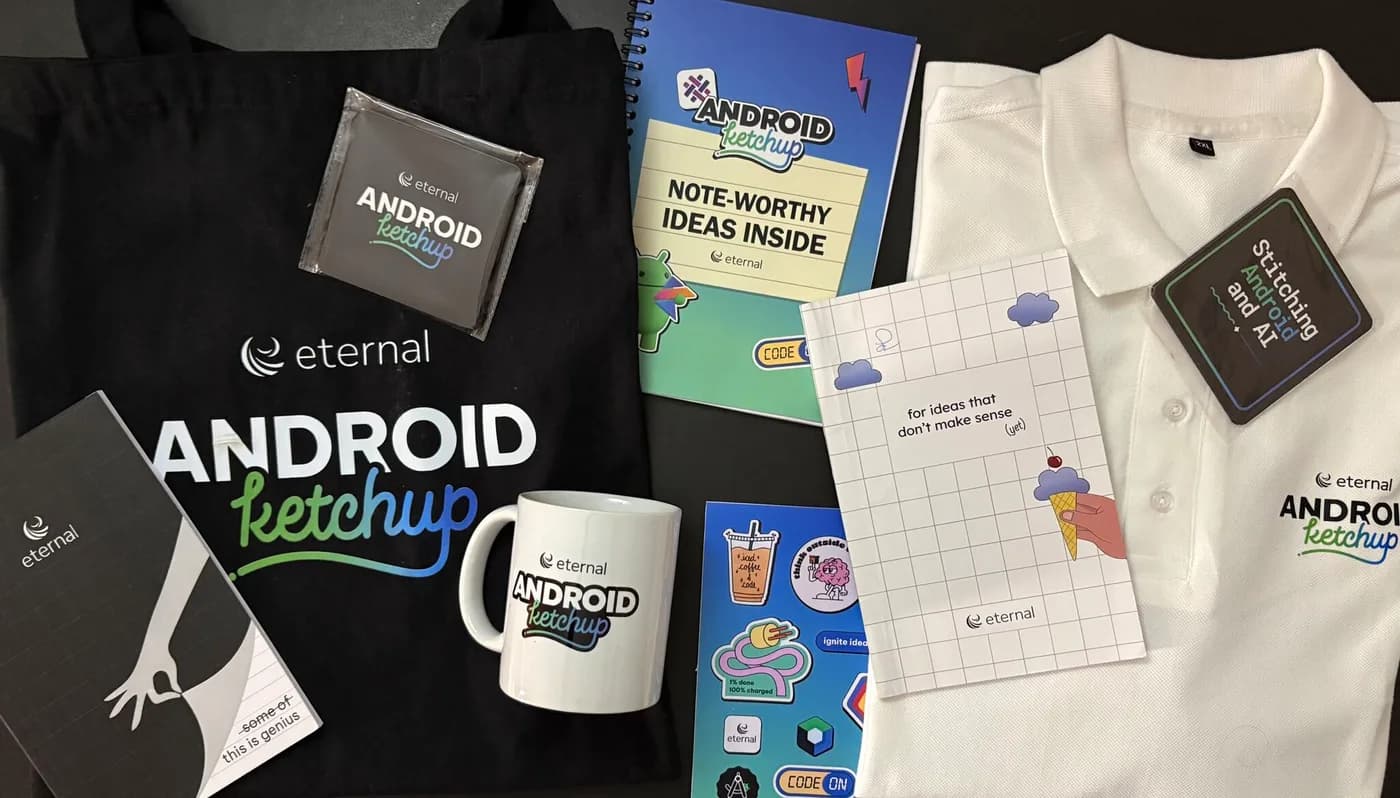
A couple of days back I was at the Zomato office farmhouse for an invite-only Android developers meetup by Eternal. They call it Android Ketchup. Fire wordplay, not going to lie.
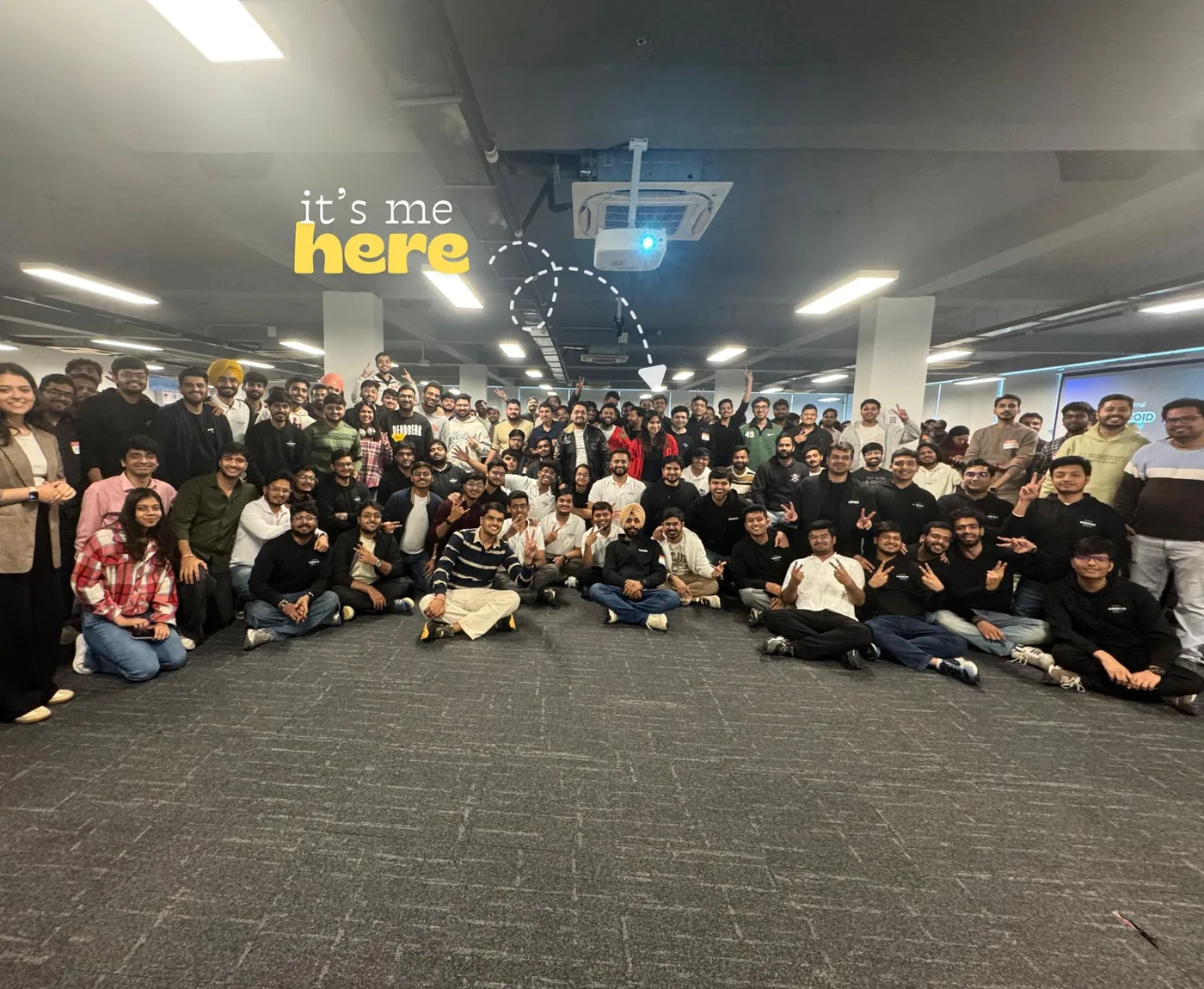
Most of the room. I'm in there somewhere.
The first thing that hit me was the scale of the Eternal ecosystem. 9.2K peak orders a minute on Zomato. 5K on Blinkit. All of that while staying 99.99% crash-free. Numbers like that stop being abstract once you've spent a few years writing Android apps and know exactly how much can go wrong between a tap and a network call.
Stitch, an org-context engine
Hitesh Raghuvanshi and Kashish Sharma showed us Stitch, an actual org-context engine that knows Eternal's internal platforms and coding standards. It connects to Figma, Confluence, Slack, and GitHub, and the demo included agents that review code and raise PRs directly from Slack. The pitch wasn't "an AI that writes code." It was an AI that already knows how your org writes code, which is a much harder problem and a much more useful one.
Aspida, testing that doesn't feel like testing
Ayaaz Ansari and Saurabh Vashisht talked about Aspida, their in-house intelligent app testing automation platform. Two things stuck with me: writing test cases in plain English, and catching UI padding issues a human reviewer would probably miss on a normal pass. The theme across both talks was the same, really: internal tools built specifically for how Eternal's own engineers work, not a generic product bent to fit.
Backend-driven UI, finally explained
This was the talk I was waiting for. Robin S. and Himanshu Yadav broke down backend-driven UI with a short live demo, and it finally explained something I'd wondered about for a while: how the entire app layout changes overnight for Diwali or New Year without a single update on the Play Store.
I also got a solid side conversation with Vatsal Kesarwani about the same system. The short version: they use protobufs over JSON and gRPC over REST, for speed and efficiency at their scale. Makes sense once you think about how many clients are parsing that layout payload on every app open.
Composable layouts, past rows and columns
Sachin Malik, an engineer at PayPay, talked about custom composable layouts: going beyond the usual Row and Column and dropping down into the graphics layer directly.
measure.sh
Abhay Sood, CEO of measure.sh, showed his product live. It's an open-source tool that lets mobile developers trace what's actually happening inside their app instead of debugging blind, crashes, ANRs, performance traces, the works. Pretty neat, and refreshing to see it built by mobile developers who clearly got tired of adapting web-first observability tools to a mobile app's very different failure modes.
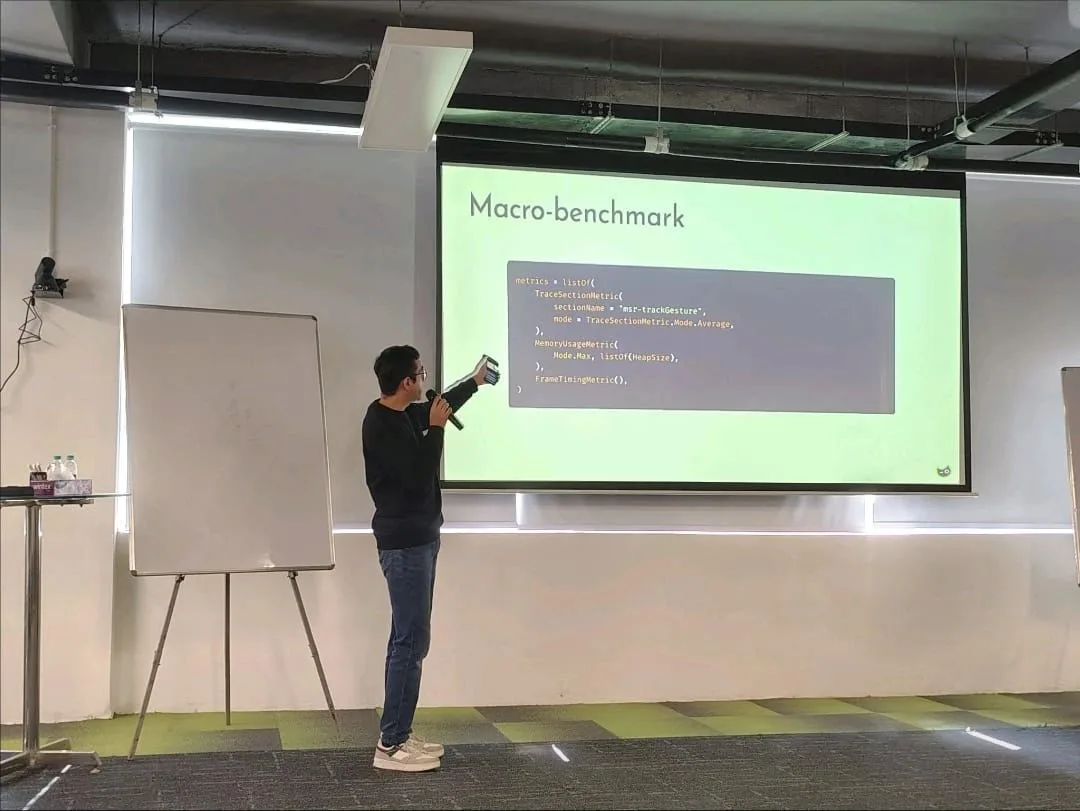
A macro-benchmark slide mid-talk.
The project is fully open source: measure-sh/measure on GitHub.
Everything else
Had a great lunch chat with Atharva Tyagi from Karya, which made the food even better than it already was.
There was a fun, nerdy Android quiz. I came 17th out of 200-plus people. Tragic. Skill issue, honestly. Technically no prize for 17th place, but I bullied a dev into handing over an Eternal t-shirt anyway (if you're reading this and it was you, please reply, I never got your name). It's double my size. We take those anyway. He was also kind enough to give me a lift in his car after the event, which more than made up for the size.
Also really enjoyed talking to Amritpal Singh and Karan Gourisaria on the side.
Good food, and genuinely good people. Big thanks to the team, and kudos to Nandini Jhingran for organizing the whole thing.
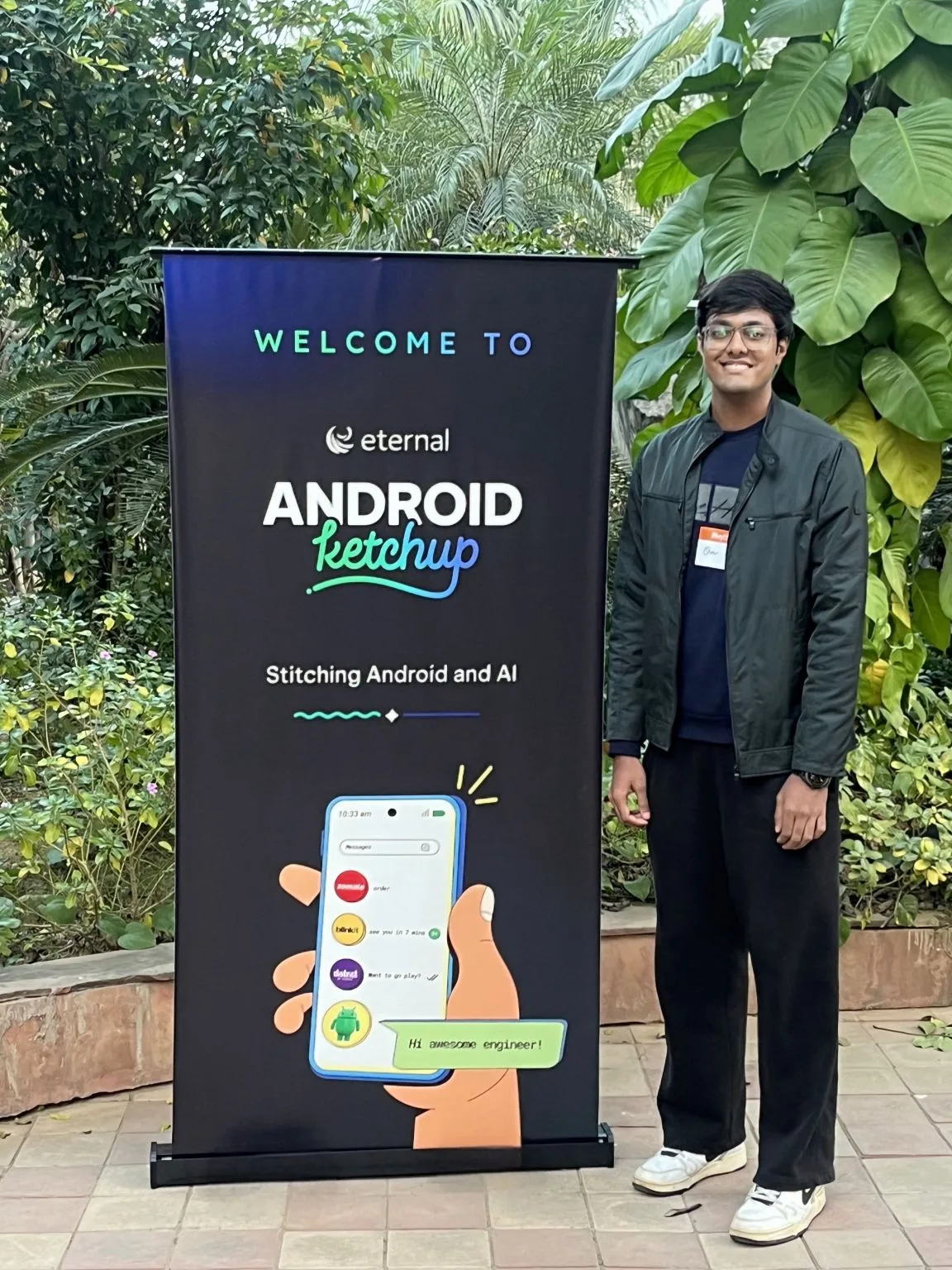
Outside the venue, before the Diwali-scale numbers made me feel small.
if this made you think, you might enjoy something from the library.